
Load Ratings for Cast Iron Grates: DIN/EN, ANSI & AASHTO Standards
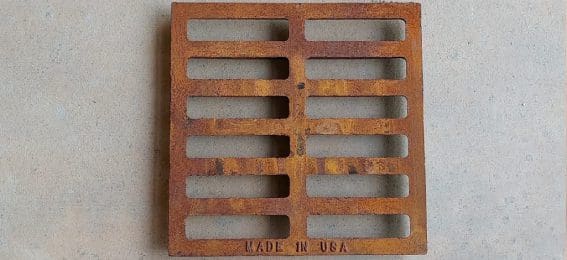
Whether you’re designing a residential driveway drainage system, upgrading a commercial parking lot, or installing drainage infrastructure in an industrial facility, the grate covering your trench drain plays a vital role in how well the system performs. And selecting the wrong grate can lead to premature wear, structural failure, costly repairs, and even safety hazards for pedestrians and vehicles.
One of the most important considerations when selecting a trench drain grate is its load rating. Load ratings indicate how much force or traffic a grate can safely handle under normal operating conditions. Understanding these ratings helps ensure the grate performs as intended while protecting the drainage system beneath it.
At The Trench Grate Store, we offer a wide variety of trench drain grates and drainage solutions for residential, commercial, and industrial applications that can accommodate different load requirements. Among the many options available, cast iron trench grates remain one of our most popular choices because they offer the highest load ratings and exceptional durability.
What Are Load Ratings?
Load ratings are classifications used to indicate the amount of weight a drainage grate can safely support. These ratings help engineers, contractors, architects, and property owners determine whether a particular grate is suitable for a specific application.
Load ratings are typically determined through standardized testing procedures that evaluate how much weight a grate can handle before failure occurs. These tests help create uniform classifications that make it easier to compare products and select the appropriate drainage solution for a project.
Cast iron is widely recognized as one of the strongest materials available for trench drain grates. Its exceptional strength allows it to support substantial loads while maintaining its structural integrity over time.
Common Load Rating Classifications and Their Applications
While specific classifications may vary depending on regional standards, many cast iron trench drain grates are categorized using established load rating systems designed to match anticipated traffic conditions.
DIN/EN Load Classifications
The drainage industry primarily utilizes the DIN 19580 / EN 1433 standard, which categorizes grates into six distinct classes ranging from Class A to Class F.
- Class A: Class A load ratings are intended for areas primarily used by pedestrians and cyclists. These grates are commonly found in sidewalks, patios, and landscaping projects.
- Class B: Class B cast iron grates are suitable for areas that experience occasional passenger vehicle traffic. Common applications include residential driveways and light-duty commercial properties.
- Class C: Class C load ratings are frequently selected for commercial environments where vehicles are present on a regular basis, such as commercial parking lots, service stations, and multi-family residential complexes.
- Class D: Class D cast iron grates are among the most commonly specified options for high-traffic commercial and municipal applications. They are suitable for public streets, roadways, shipping facilities, and distribution centers.
- Classes E and F: For environments exposed to exceptionally heavy loads, Classes E and F provide the highest levels of strength and durability. These grates are commonly installed in airports, manufacturing facilities, ports and shipping terminals, and freight yards.
AASHTO Standards
When choosing cast iron trench grates, it’s also important to take into account the standards set by the American Association of State Highway and Transportation Officials (AASHTO). AASHTO classifications are specifically engineered around automotive and commercial truck traffic, focusing on axle loads rather than just total weight. The most common AASHTO designations you will encounter include:
- H-20: Designed to withstand a full 32,000-pound axle load, simulating the rear axle of a standard 20-ton semi-truck. Under AASHTO M 306, a grate must pass a proof-load test of 40,000 pounds applied to a 9×9-inch area to achieve this rating.
- HS-20: Represents a tractor-trailer combination configuration, but carries the same 32,000-pound axle load requirement as H-20.
- H-25 / HS-25: Designed for heavier commercial transport, requiring a 40,000-pound axle load and a proof-load test of 50,000 pounds.
ASME/ANSI Load Classifications
ASME/ANSI standard ratings govern floor, area, and trench drains utilized primarily inside or immediately adjacent to non-residential buildings, such as commercial kitchens, food processing plants, industrial facilities, and parking structures. Rather than measuring moving highway axle tons, the ASME standard evaluates a grate’s Safe Live Static Load.
ASME A112.6.3 categorizes grates into five distinct duty classifications:
- Light Duty: Safe live static load under 2,000 lbs. Strictly for pedestrian foot traffic, residential patios, and areas free of wheeled equipment.
- Medium Duty: Safe live static load between 2,000 lbs. and 4,999 lbs. Built to handle light pneumatic tire traffic, such as hand carts, golf carts, and residential vehicles.
- Heavy Duty: Safe live static load between 5,000 lbs. and 7,499 lbs. Suitable for commercial parking areas, light commercial trucks, and warehouse walkways.
- Extra Heavy Duty: Safe live static load between 7,500 lbs. and 10,000 lbs. Engineered for commercial transport routes, heavy forklift traffic, and industrial facility floors.
- Special Duty: Safe live static load over 10,000 lbs. Reserved for extreme load conditions, such as airport hangars, docks, and heavy manufacturing hubs.
Why Selecting the Correct Load Rating Matters
Choosing a trench drain grate based solely on appearance or cost can create significant problems over time. In contrast, selecting the proper load rating helps protect both the drainage system and the people who use the surrounding area.
Enhanced Safety
Safety is one of the most important reasons to choose the appropriate load rating. A cast iron grate that is not designed for the loads it encounters may crack, shift, or collapse under pressure. This can create serious hazards for pedestrians, drivers, and equipment operators.
Less Risk of Premature Failure
Installing an under-rated grate often results in accelerated wear and damage. Properly rated cast iron grates, however, are designed to withstand the expected demands of the installation environment, helping extend the life of the drainage system.
Protected Infrastructure
Drainage systems represent a significant investment in infrastructure. When a grate fails, damage may extend beyond the grate itself and affect the trench drain channel, surrounding pavement, or concrete surfaces.
Selecting an appropriately rated grate helps protect the entire system and minimizes the likelihood of expensive repairs.
Regulatory Compliance
Many construction projects must comply with local building codes, engineering standards, and safety regulations. Load-rated grates help ensure drainage systems meet applicable requirements and perform as intended throughout their service life.
Find the Right Cast Iron Grate for Your Project at The Trench Grate Store
Selecting a cast iron grate with the appropriate load rating is essential for protecting both people and infrastructure while maximizing the lifespan of the drainage system. At The Trench Grate Store, we offer an extensive selection of trench drain grates and drainage products designed to meet a wide range of residential, commercial, and industrial requirements, and we can help you find the ideal solution.
Explore our complete selection of drainage products and contact our knowledgeable support staff for expert guidance. We offer both 1-in and 1.5-inch cast iron grates and can even discuss customized solutions. With the right cast iron grate and load rating, you can build a safer, stronger, and longer-lasting drainage system.